Hormones and Gut Health: Can You Balance One Without the Other?

Why Gut and Hormone Health Are More Connected Than You Think
Have you ever noticed that your digestion changes around your cycle or that bloating, cravings, and mood shifts seem to have a rhythm of their own? These patterns aren’t random. They’re messages from your hormones and your gut; two systems that influence each other in ways we often overlook, especially when gut health and hormones are considered together.
While estrogen and progesterone are often thought of as the main female hormones, they don’t act alone. Hormones like testosterone, thyroid hormones, insulin, and cortisol all play key roles in metabolism, energy, and emotional balance, and each one interacts closely with the gut microbiome, forming the basis of the hormones and gut health relationship.
Recent research shows this relationship moves in both directions. Hormones influence the composition and diversity of gut bacteria, while those same microbes can alter how hormones are produced, metabolized, and cleared from the body. The gut acts almost like an endocrine organ of its own, capable of regulating hormone activity and sending signals back to the brain (The Gut Microbiome and Sex Hormone-Related Diseases, 2021).
When the gut isn’t functioning optimally, it can directly affect hormone balance. Constipation is a perfect example. If estrogen has already been processed by the liver and prepared for elimination but isn’t excreted through regular bowel movements, it can be reabsorbed back into circulation. Over time, this can contribute to higher circulating estrogen levels and symptoms like bloating, PMS, and breast tenderness. Hormonal symptoms like fatigue or PMS benefit from the insights of a naturopath with a clinical focus in hormones, trained to identify subtle endocrine imbalances.
Certain gut bacteria also produce an enzyme called β-glucuronidase that can reactivate estrogen once it reaches the intestines, allowing it to re-enter the bloodstream. This recycling effect adds to the hormonal load the liver has to manage and can intensify symptoms of estrogen dominance, something a skilled naturopathic doctor who focuses on hormones would consider while looking at your lab results.
Other studies highlight similar connections between the gut and stress hormones such as cortisol (Rosin et al., 2020), thyroid hormone metabolism (Xie et al., 2023), and metabolic hormones like insulin and GLP-1 that help regulate appetite and blood sugar.
When the gut and hormones are in sync, digestion, mood, and energy tend to stay steady. When they are not, symptoms often appear in clusters that seem disconnected but share the same root cause: imbalance in the gut-hormone axis. A skilled hormone and gut health practitioner, particularly one trained in naturopathic medicine, understands how deeply these systems affect each other.

Symptoms That Signal You Need to Look at Both
When the gut and hormones fall out of sync, symptoms tend to show up in clusters that seem unrelated. Common signs include:
Estrogen dominance or irregular cycles
Digestive complaints such as constipation, diarrhea, gas, or bloating
PMS, breast tenderness, or mood swings
Fatigue and brain fog
Acne, hair changes, or unexplained weight fluctuations
Insulin resistance or reactive hypoglycemia
Low libido or stress intolerance
These symptoms are the body’s way of communicating imbalance, and often, both systems need attention to restore equilibrium. This can be best addressed by a naturopath focusing in gut health and hormone support.

Why Balancing Just One Doesn’t Work
Take estrogen as an example. Once estrogen has served its purpose, the liver must conjugate it, a process that makes it inactive and ready for excretion. Certain compounds, like DIM (diindolylmethane) found in cruciferous vegetables, can help the liver process estrogen through phase 1 detoxification, which we might assume solves the problem. Balancing hormones and gut health together leads to more sustainable results than treating each system in isolation.
But here’s where the gut microbiome steps in. Inside the intestines, an enzyme called β-glucuronidase, produced by certain bacteria, can de-conjugate estrogen, essentially reactivating it. That reactivated estrogen can then be reabsorbed back into circulation, forcing the liver to process it all over again.
This process, when overactive, contributes to a state called estrogen dominance, where estrogen levels remain relatively higher than progesterone. The result can be breast tenderness, heavy periods, or stubborn weight retention. Supporting liver detox pathways without addressing the gut allows this hormonal recycling loop to continue, underscoring the value of a gut health naturopath in comprehensive care.
The same logic applies to conditions like Polycystic Ovary Syndrome (PCOS). It’s tempting to focus only on lowering testosterone through herbs like saw palmetto or spearmint. While these can help reduce symptoms such as acne or unwanted hair growth, they don’t address the underlying imbalance in insulin sensitivity, inflammation, and gut dysbiosis often seen in PCOS (The Gut Microbiome and Sex Hormone-Related Diseases, 2021).
Other research shows similar microbiome involvement in osteoporosis and hormone-sensitive cancers. The gut influences how estrogen circulates and interacts with tissues, affecting bone density and estrogen-related growth pathways (Rosin et al., 2020). Supporting the gut-hormone axis may therefore help reduce systemic inflammation and create a healthier metabolic environment for long-term disease prevention.
In short, treating just hormones, whether stimulating or clearing them, is only half the story. The gut microbiome holds the upper hand.

What Makes Naturopathic Care Different
Naturopathic doctors look at the relationship between systems, not just lab results in isolation. Conventional medicine excels at identifying pathology and offering targeted treatments for acute problems. But what it often misses is the space in between, the subtle imbalances that affect energy, digestion, mood, and quality of life.
I like to think of naturopathic doctors as the “quality-of-life doctors.” We don’t do emergency medicine; we do medicine for everyday function. Our focus is helping your body return to balance by identifying the underlying reasons for your symptoms rather than suppressing them.
Every patient’s presentation is unique. One woman with estrogen dominance might need more liver support, while another needs to rebalance her microbiome and stress response. We take time to explore those patterns, connecting dots across hormones, gut health, immune balance, and metabolism. Many patients find lasting relief only after working with the best naturopath for gut health, someone who understands both lab results and lifestyle factors.
At Aurora Integrative Health, we focus on restoring harmony across these systems. Our medicine shines most when addressing:
Hormone regulation and menstrual health
Gut health and microbiome restoration
Immune system stabilization
Metabolic balance and insulin resistance
Detoxification and liver support
DNA and cellular protection
Our philosophy is simple: the body has the inherent capacity to heal when given the right support.

The Power of Functional Testing: Seeing the Whole Picture
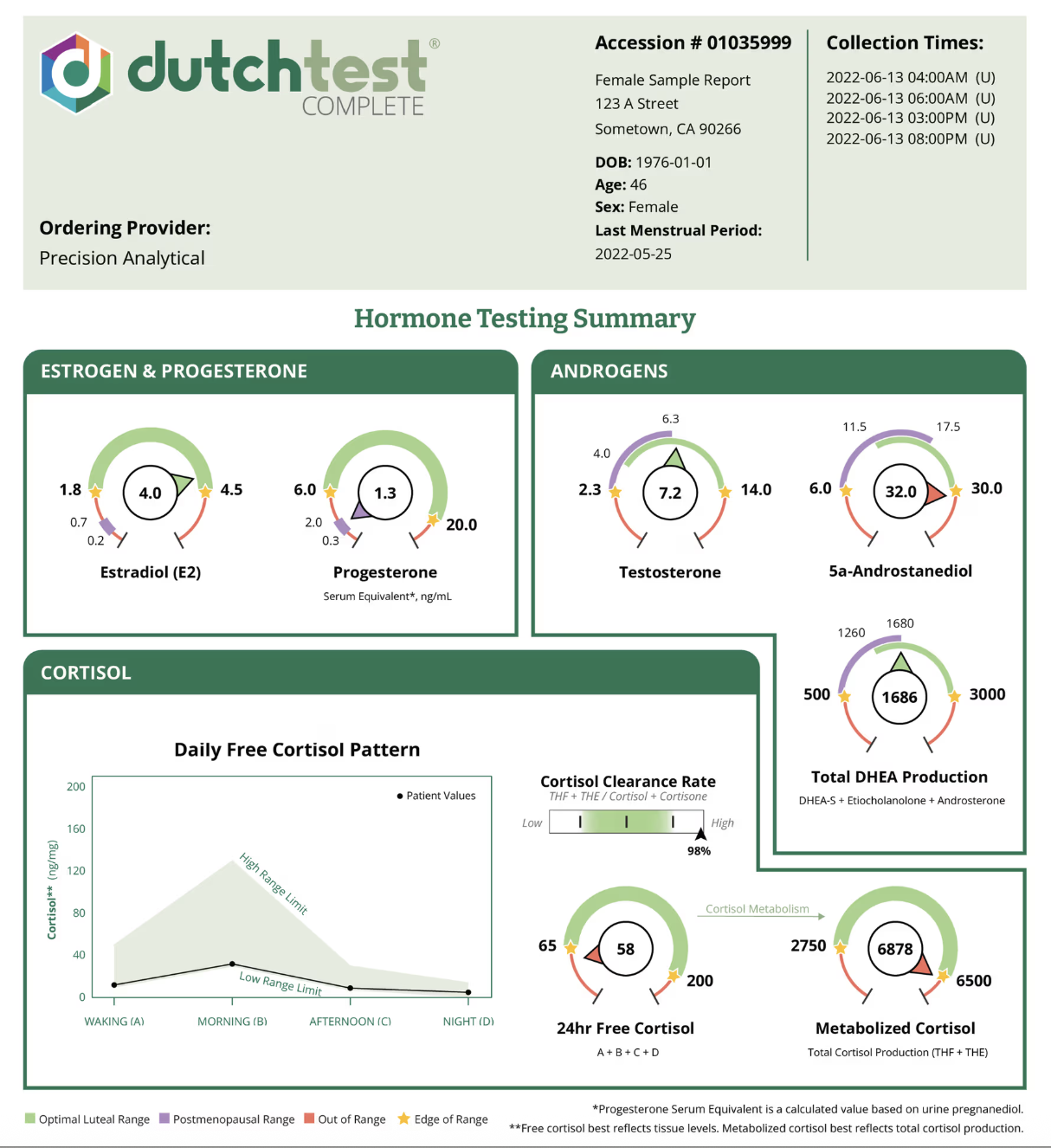
Functional testing helps reveal what can’t be seen on standard bloodwork. When we combine hormone and gut health testing, we can understand how these systems interact in real time.
DUTCH Test (Dried Urine Test for Comprehensive Hormones): Measures how your body metabolizes estrogen, progesterone, testosterone, cortisol, and their by-products over a 24-hour period. It helps uncover patterns of estrogen dominance, low progesterone, adrenal fatigue, or poor hormone detoxification.
Comprehensive Stool Analysis: Examines gut microbial balance, digestive capacity, inflammatory markers, and levels of β-glucuronidase, the enzyme directly involved in estrogen reactivation. Advanced panels (like the GI Effects or US Biotek functional profiles) can also evaluate short-chain fatty acids, intestinal immunity, and gut permeability.
Organic Acids Test (OAT): Provides insight into your body’s metabolism, energy production, detox pathways, and nutrient status. It bridges the gap between hormones, mitochondria, and digestion.
When these tests are interpreted together, they tell a story: how your hormones are being processed, how your gut is influencing that process, and where support will have the greatest impact. You can explore our clinical services to see how functional testing and naturopathic treatment integrate to restore both hormone and gut health.
How We Naturally Restore Gut and Hormone Health
The approach to restoring hormone and gut balance depends on each person’s presentation, but it often unfolds in phases:
1. Support and Regulate
Start by optimizing the basics such as diet, hydration, and stress response. We use targeted nutrients and herbs to improve liver detox pathways including B-vitamins, magnesium, and cruciferous compounds like DIM and sulforaphane. If constipation is present, we address it immediately since proper elimination is key for hormone clearance.
2. Repair and Re-inoculate
Next, we focus on the gut. This may include antimicrobial herbs if there’s evidence of dysbiosis, followed by probiotics or prebiotics to help rebuild microbial diversity. In human studies, probiotic and prebiotic interventions have been shown to lower cortisol levels (Steenbergen et al., 2015) and modestly influence thyroid hormone regulation (Karimi et al., 2025). A balanced gut also supports insulin sensitivity, blood-sugar stability, and even mood regulation through the gut-brain axis.
3. Re-establish Balance
Once foundational systems are working together, we fine-tune. This phase might include supporting the adrenals, improving sleep quality, or balancing thyroid function. Lifestyle interventions such as regular movement, fiber-rich foods, and mindfulness become tools to maintain hormonal resilience long term.

How to Get Started with a Naturopath Gut Health Expert
If you’re experiencing overlapping symptoms such as hormonal swings, digestive issues, fatigue, or stubborn weight changes, it may be time to look at the whole picture. Working with the best naturopath for gut and hormone health helps you uncover where the imbalances truly begin.
At Aurora Integrative Health, we begin with a thorough intake and individualized hormone and gut health testing recommendations. From there, we create a plan that fits your lifestyle, supports your goals, and integrates both evidence-based medicine and holistic care.
Book a consultation
or contact us to learn how personalized naturopathic care can help you reconnect your gut and hormones for lasting balance.

Putting it All Together
Your hormones and your gut are in constant conversation, influencing how you feel, think, and function. The science of naturopathic medicine is becoming more clear: you can’t balance one without addressing the other.
Whether you’re dealing with estrogen dominance, thyroid imbalances, stress-related fatigue, or chronic digestive issues, your body’s systems are never working in isolation. When we restore gut integrity, support detoxification, and bring hormones back into rhythm, symptoms tend to soften, and health begins to feel effortless again.
You don’t need to fight your body into balance. You just need to listen to what it’s trying to say and give it the tools to recalibrate.
- Dr. Wendy Pardiac, ND
References
The Gut Microbiome and Sex Hormone-Related Diseases. Frontiers in Endocrinology, 2021 (PMC8506209).
Rosin et al., A Preliminary Study of Gut Microbiome Variation and HPA Axis Reactivity in Infants, 2020 (PMC8121098).
Xie et al., Relationship between Gut Microbiota and Thyroid Function, Frontiers in Endocrinology, 2023.
Karimi et al., Effects of Probiotics and Synbiotics on Thyroid Hormones in Adults, Thyroid Research, 2025.
Steenbergen et al., Prebiotic Intake Reduces the Waking Cortisol Response and Alters Attentional Bias, Psychopharmacology, 2015.